



How to Overcome Podcast Imposter Syndrome
Imposter syndrome is like a smoke alarm that goes off when you make toast. It's loud, it feels urgent, and nothing is actually on fire.
Podcast imposter syndrome is the feeling that you're not qualified, experienced, or interesting enough to host a show. The thing that helps most is simple: tell one person you trust about your idea and your doubts, ask for honest feedback, and take one small step while the feeling is still there.
We'll cover:
- What podcast imposter syndrome looks like
- Why it's so common
- Even people in the industry feel it
- The one thing to do about it
- What to do when the inner critic shows up
- Small steps that make starting easier
- Common questions
What podcast imposter syndrome looks like
It's the voice that says: "Am I really cut out for this? Am I articulate enough? Will anyone listen?"
It usually shows up as:
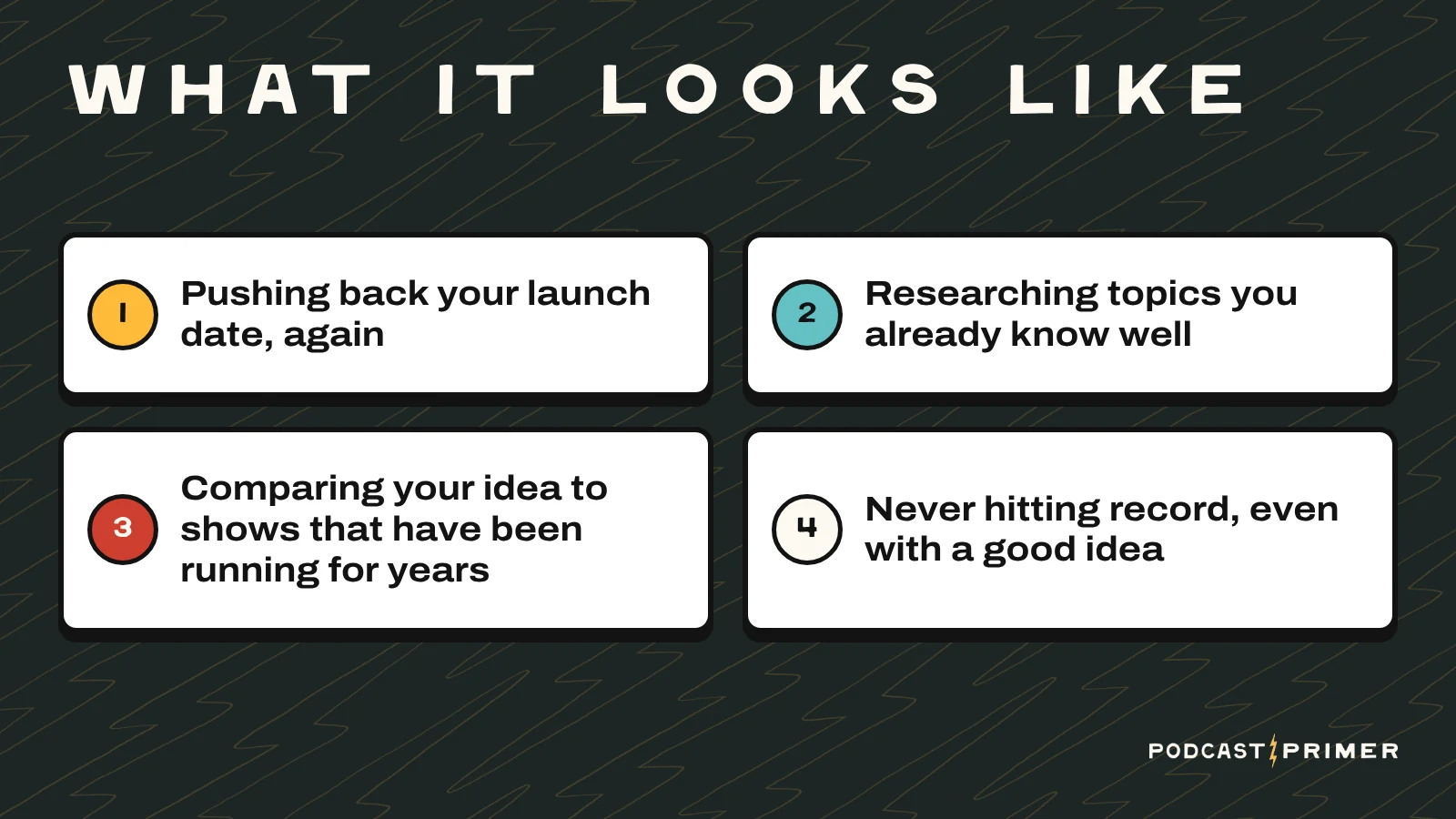
- Pushing back your launch date, again
- Researching topics you already know well
- Comparing your idea to shows that have been running for years
- Never hitting record, even with a good idea
If that sounds familiar, you're in good company.
Why it's so common
- Anyone can start a podcast. That makes the space feel crowded.
- Comparison is easy. Your rough idea is up against someone else's episode 300.
- Your voice feels exposed. Literally.
- Nobody tells you you're ready. There's no gatekeeper, so there's no green light either.
Even people in the industry feel it
Even with years in the podcast industry and a college degree in audio engineering, I questioned whether I was qualified to make the Podcast Primer course. I had the idea in 2018. I didn't commit to it until January 2024. I caught myself thinking, "Do I know enough to create this? Someone else is probably more qualified." What got me moving was sharing those doubts with a colleague I'd worked with for seven years. Their response: "There is no one better than you to create this course."
That one conversation did more than another year of thinking it over would have.
The one thing to do
Share your idea and your doubts with one person you trust. Ask for their honest feedback.
That person could be:
- A mentor who knows your strengths
- A friend who listens to podcasts
- Someone with their own show
- A colleague who knows your work
It helps for a few reasons. It makes the idea real. It gets someone on your side. And it gives you a view of yourself from the outside, which is usually kinder and more accurate than the one in your head.

When the inner critic shows up
Reality check: that voice may never go away completely. If you wait for it to leave, you may wait a long time. The goal is to act while it's still talking.
When it shows up:
- Be curious. Ask what the fear is really about.
- Be kind to yourself. Doubt is normal when you try something new.
- Be open to feedback. How you see yourself and how others see you are often different.
- Remember you have company. Every podcaster has felt this.
You don't have to be the expert
You don't need to be the world's top authority to make a useful show. You need to know more than your listener about one thing, or be willing to learn it out loud. Your experience counts, and good is enough to help people.
One way to take the pressure off: share what you've tried and what you're learning. "Here's what worked for us" is something you can always stand behind, and it's often more useful to a beginner than a lecture from the top of the field.
Small steps that make starting easier
Doubt tends to show up around work you care about. If the show didn't matter to you, you wouldn't be nervous about it. These small steps help you move while the nerves are still there:
- Record a practice take. Five minutes, labeled "practice," that nobody has to hear.
- Set a date and tell your one person. A date someone else knows about is harder to push back.
- Start smaller than a full episode. A short trailer or a ten-minute first episode still counts.
- Keep the kind words. Save encouraging replies and messages in one place. Read them before you record.
- Publish before you feel ready. Feeling ready tends to follow the first few episodes.
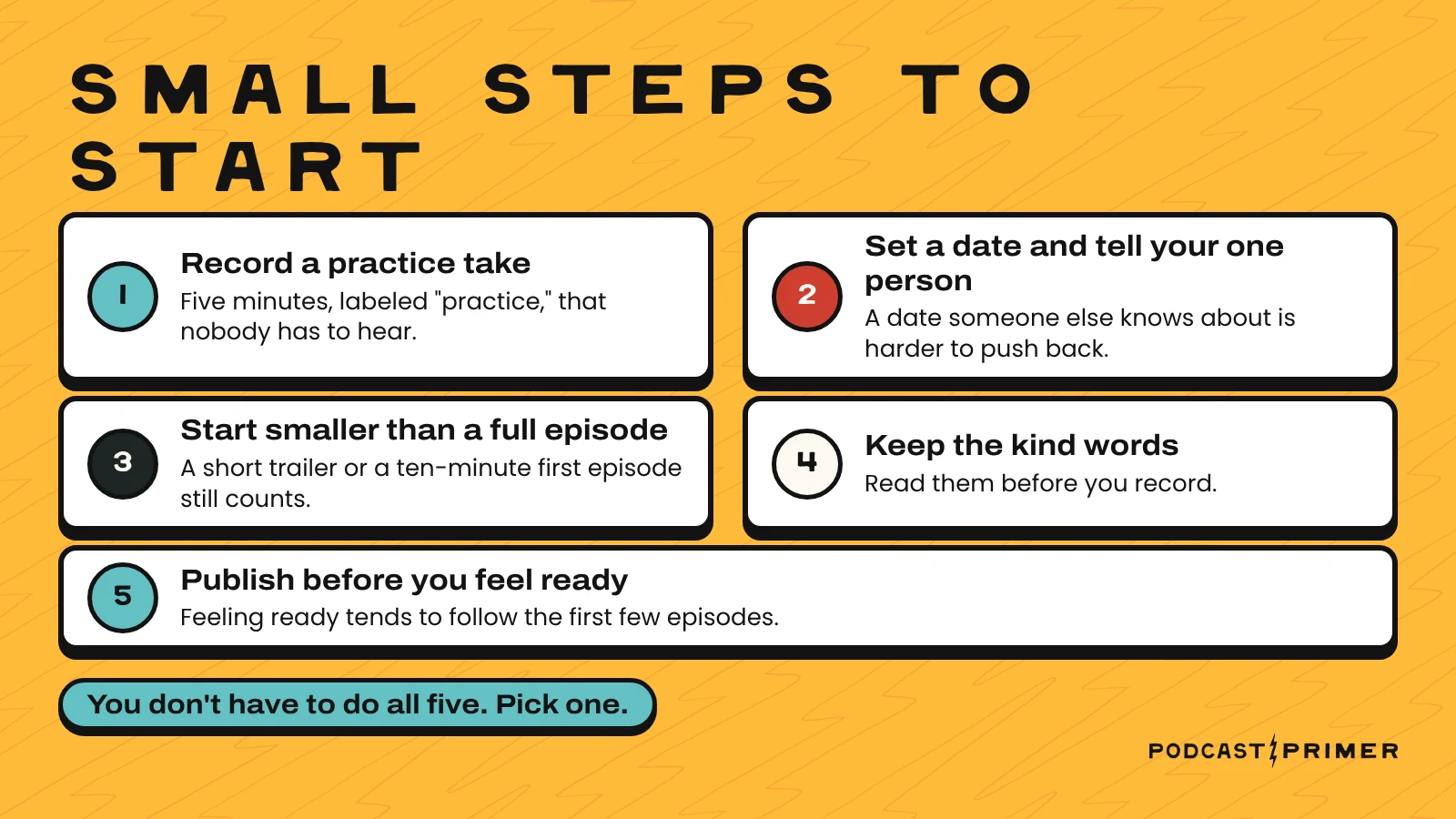
Reality check: you don't have to do all five. Pick one.
Podcast imposter syndrome FAQ
Is it normal to feel like a fraud when starting a podcast?
Yes. Almost everyone feels it before episode one, including people who've worked in podcasting for years.
Do I need to be an expert to start a podcast?
No. You need a topic you care about and a listener you want to help. You can also interview the experts.
Does podcast imposter syndrome ever go away?
For most people it gets quieter with practice. It can come back when you try a new format, book a bigger guest, or reach more listeners. That's normal, and the same steps work each time.
How do I start a podcast when I feel unqualified?
Pick a topic you care about, tell one person you trust, and record a short practice take. You can share what you're learning as you go, and you can invite guests who know more than you do.
What if nobody listens?
Early on, few people will, and that's useful. A small audience is the best place to practice. And a small audience of the right people is worth more than a big one of the wrong people.
Your next step
Today, tell one person about your podcast idea and the doubt that comes with it. That's the whole assignment.
After that, the practical work starts with choosing your topic. If you're worried about how you'll sound, read how to find your podcast voice. The free Podcast Primer workbook walks through the launch from there.
Rather hand this off?
Podcast Primer is made by Holistic Media. We plan, record, edit and publish podcasts for brands, so your team only has to show up and talk.
See how it works →